Familiarize yourself with international EN and ISO standards that define the safety, quality, and effectiveness requirements for personal protective equipment.
EN 13034 – Specifies requirements for protective clothing against liquid chemicals (Type 6 and Type PB[6]).
EN 14126 – A harmonized European standard; specifies requirements for protective clothing against infectious agents.
EN 14605 – Specifies requirements for protective clothing with liquid-tight (Type 3) or spray-tight (Type 4) seams, and accessories protecting parts of the body (Type PB[3] and PB[4]) against chemical levels.
EN ISO 13982-1 – Specifies requirements for chemical protective clothing against airborne solid particulates (Type 5).
EN ISO 11611 – Specifies requirements for protective clothing used in welding and allied processes.
EN ISO 11612 – Specifies requirements for protective clothing against heat and flame.
EN ISO 14116 – Specifies requirements for protective clothing with limited flame spread properties, for protection against brief contact with small igniting flames and heat.
IEC 61482-2 – Specifies requirements for protective clothing designed to protect users against the thermal hazards of an electric arc.
EN 342 – Specifies requirements for protective clothing and garment ensembles against cold environments.
EN 343 – Specifies requirements for protective clothing against rain.
EN 14058 – Specifies requirements for protective clothing against cool environments.
EN 469 – Specifies requirements for protective clothing for firefighters.
EN 1073-2 – Specifies requirements for protective clothing against radioactive contamination.
EN 14404 – Specifies requirements for kneepads for working in a kneeling position.
EN ISO 13688 – Specifies general requirements for protective clothing: ergonomics, sizing, ageing, compatibility, marking, etc.
EN 340 (Withdrawn) – Established basic requirements for professional protective clothing. Replaced by EN ISO 13688:2013.
EN 388 – Specifies requirements for protective gloves against mechanical risks.
EN 1082-1 – Specifies requirements for cut and stab resistant gloves and arm protectors. Part 1: Chain mail gloves and arm protectors.
EN 1082-2 – Specifies requirements for cut and stab resistant gloves and arm protectors. Part 2: Gloves made of non-metallic materials (leather, synthetic or natural fabric).
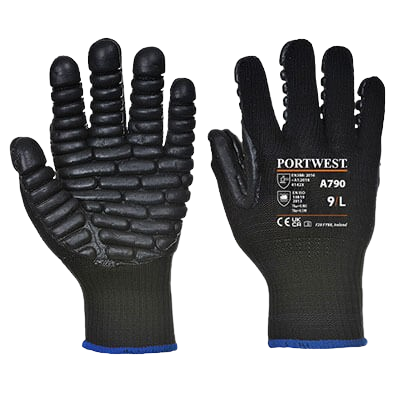
EN ISO 10819 – Specifies requirements for hand and arm protection against mechanical vibration and shock.
EN ISO 374-1 – Specifies requirements for protective gloves against hazardous chemicals and microorganisms.
EN ISO 374-2 – Specifies requirements for protective gloves against hazardous chemicals and microorganisms. Part 2: Determination of resistance to penetration.
EN ISO 374-5 – A related standard to EN ISO 374-1; specifies additional requirements for gloves against bacteria and fungi.
EN 374-3 (Withdrawn) – Specified resistance to chemical permeation. Replaced by EN 16523-1:2015+A1:2018.
EN 407 – Specifies requirements for protective gloves, arm protectors, and other hand protectors against thermal risks.
EN 511 – Covers requirements for protective gloves against cold down to -50 °C.
EN 12477 – Specifies requirements for welders' gloves (also includes EN388 and EN407 standards). Divided into two categories: Type A (more protection, less flexibility) and Type B (less protection, more flexibility). Note: No pictogram.
EN 455 – Specifies requirements and test methods for single-use medical gloves. Divided into: -1 (absence of holes), -2 (physical properties), -3 (biological properties).
IEC 60903 – International Electrotechnical Commission (IEC) standard that specifies requirements for dielectric gloves.
EN ISO 21420 – Specifies basic requirements, constructional and ergonomic details, as well as test methods for professional gloves and arm protectors.
EN 420 (Withdrawn) – Covered basic requirements and test methods for protective gloves. Replaced by EN ISO 21420:2020.
EN 166 – Specifies specifications for eye protectors.
EN 167 – Establishes the methodology for optical testing of eye protectors.
EN 168 – Explains the methodology for non-optical testing of eye protective devices.
EN ISO 4007 (Replaces EN 165) – General standard, defines terms and their explanations for eye protectors.
EN 169 – Explains requirements for welders' dark filters (glasses, goggles, welding shield glass, etc.).
EN 170 – Specifies requirements for eye protectors with ultraviolet (UV) radiation protection.
EN 171 – Specifies requirements for eye protectors with infrared (IR) filters.
EN 172 – Specifies requirements for eye protectors with sun glare filters.
EN 175 – Specifies requirements for face and eye protectors during welding and similar processes.
EN 379 – Specifies requirements for personal eye protection, specifically automatic darkening welding filters.
EN 1731 – Specifies requirements for mesh eye and face protectors.
EN ISO 12312-1 (Replaces EN 1836) – Specifies conditions for sunglasses and similar accessories.
EN 136 – Specifies requirements for full face masks for respiratory protection.
EN 140 – Specifies requirements for full and half face masks for respiratory purposes.
EN 149 – Specifies requirements for filtering half masks against solid and liquid particulates (FFP1, FFP2, FFP3).
EN 1827 – Establishes requirements for half masks for respiratory protection that do not have an inhalation valve and have removable filters.
EN 143 – Specifies requirements for respiratory protective devices, specifically particulate filters.
EN 14387 – Specifies requirements for gas, vapor, and combined filters.
EN 148-1 – Specifies norms for screw threads of masks for respiratory protection (for filter attachment points).
EN 14683 – Specifies requirements for medical masks.
EN 12941 – Specifies requirements for powered filtering devices attached to helmets and hoods.
EN 12942 – Specifies requirements for powered filtering devices attached to full face, half face, and other types of respiratory masks.
EN 14594 – Specifies requirements for continuous flow compressed air breathing apparatus.
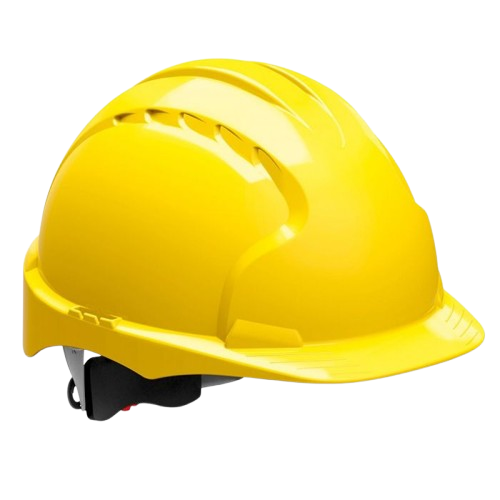
EN 397 – Specifies norms and requirements for industrial safety helmets.
EN 812 – Covers requirements for industrial bump caps.
EN 14052 – Specifies requirements for high-performance industrial helmets.
EN 443 – Specifies requirements for firefighters' helmets intended for use in buildings and enclosed structures.
EN 352-1 – Specifies requirements for hearing protectors. Part 1: Earmuffs.
EN 352-2 – Specifies requirements for hearing protectors. Part 2: Earplugs.
EN 352-3 – Specifies requirements for earmuffs integrated into industrial safety helmets or face shields.
EN 352-4, 352-6, 352-8 – Covers specialized earmuffs: with active noise reduction (-4), with integrated headphones (-6), and with other hearing protection functions (-8).
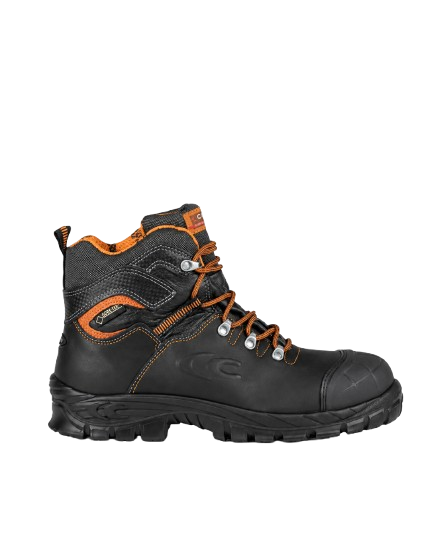
EN ISO 20345 – Establishes requirements for all categories of safety footwear (safety footwear with protective toecaps).
EN ISO 20347 – Specifies requirements for occupational footwear that is not intended to protect against mechanical risks (impact, compression).
EN ISO 13287 – Covers test methods for slip resistance of safety footwear.
EN 13832-1 – Specifies terminology and requirements for protective footwear against chemicals.
EN ISO 22568 (Replaces EN 12568) – Specifies requirements and test methods for toecaps and penetration-resistant inserts for footwear.
EN IEC 61340-4-3 – International Electrotechnical Commission standard; specifies electrical resistance requirements for dielectric safety footwear.
Note: Reserved codes EN 20340 and EN 20349 belong to specific protective footwear standards.
EN 361 – Establishes requirements for full body harnesses for fall protection from height.
EN 354 & EN 355 – Specifies requirements for lanyards (EN 354) and energy absorbers for fall arrest (EN 355).
EN 358 & EN 813 – Requirements for work positioning belts (EN 358) and sit harnesses (EN 813).
EN 360 & EN 353-2 – Specifies retractable type fall arresters (EN 360) and guided type fall arresters on a flexible anchorage line (EN 353-2).
EN 362 – Establishes requirements for connectors for fall protection from height (karabiners, hooks, etc.).
EN 795 – Specifies requirements for fall protection equipment, specifically anchor devices.
EN 1497 – Specifies requirements for rescue harnesses.
EN 1891 & EN 892 – Requirements for low stretch kernmantel ropes (EN 1891) and dynamic mountaineering ropes (EN 892).
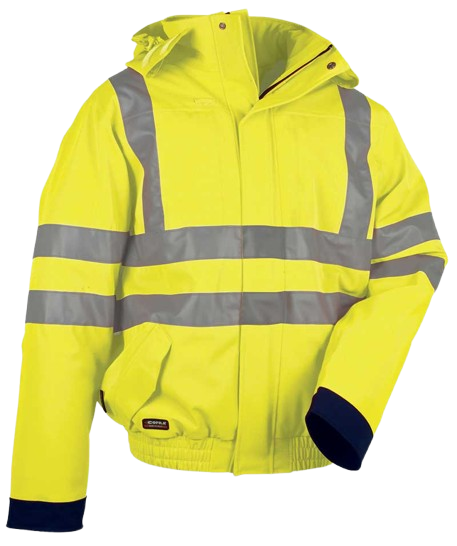
EN ISO 20471 / EN ISO 471 – Specifies requirements for high-visibility professional protective clothing (divided into 3 categories).
EN 17353 (Replaces EN 1150) – Specifies requirements for enhanced visibility clothing for non-professional use in medium-risk conditions.
EN 13356 – Specifies requirements for high-visibility accessories for non-professional use.
RIS 3279 TOM – Specific requirements of the UK railway department regarding high-visibility protective clothing.
EN 14604 & EN 50291-1 – Requirements for smoke detectors (EN 14604) and electrical apparatus for the detection of carbon monoxide (CO) (EN 50291-1).
EN 54-1, EN 54-5, EN 54-7 – General norms for fire detection and fire alarm systems (-1), heat detectors (-5), and smoke detectors (-7).
EN 566 & EN 567 – Requirements for mountaineering equipment: slings (EN 566) and rope clamps (EN 567).
EN ISO 1141 (Replaces EN 697) – Specifies requirements for various types of twisted and braided ropes made of polyester.
EN 1149-1 – Protective clothing and gloves with electrostatic properties. Part 1: Surface resistivity.
EN 1149-2 – Protective clothing and gloves with electrostatic properties. Part 2: Vertical resistance.
EN 1149-5 – Protective clothing and gloves with electrostatic properties. Part 5: Material performance and design requirements.
EN 1149 – General parent standard for protective clothing and gloves with electrostatic properties.
EN 16350 – Specifies specific electrostatic norms for protective gloves (ESD conditions).
EN IEC 61340-5-1 – International standard that specifies requirements for protective devices against electrostatic phenomena for electronic devices.
EN 50365 – Specifies requirements for electrically insulating helmets for use in low voltage installations (max. 1000V AC / 1500V DC).
EN 12492 – Specifies requirements for mountaineering and high-altitude work protective helmets.
EN 381 – General standard that specifies requirements for various types of chainsaw protective equipment.
EN 381-5 – Leg protectors for chainsaws (trousers/chaps).
EN 381-7 – Protective gloves for chainsaws.
EN 381-11 – Upper body protectors for chainsaws (jackets).